Diamonds have long been a symbol of love, commitment, and timeless beauty. Today’s buyers, however, have more choices than ever before. One of the most common questions shoppers ask when choosing an engagement ring or fine jewelry is:
Should I choose a lab-grown diamond or a natural diamond?
Both options are stunning diamonds with incredible brilliance and durability, but they differ in origin, price, and long-term considerations. Understanding these differences can help you make the best choice for your style, budget, and values.
In this guide, we’ll break down everything buyers need to know before purchasing a diamond.
What Is a Natural Diamond?
A natural diamond forms deep within the earth under intense heat and pressure over 1 to 3 billion years. These diamonds are brought closer to the earth’s surface through volcanic activity and later mined, cut, and polished into the stunning gemstones used in fine jewelry.
Because they are naturally created and limited in supply, natural diamonds have long been considered the traditional choice for engagement rings and heirloom jewelry.
Why Buyers Choose Natural Diamonds
- Formed naturally over billions of years
- Rare and unique gemstones
- Traditional and symbolic for engagement rings
- Often maintain stronger long-term value
- Considered collectible heirloom pieces
For many couples, the idea of wearing a diamond created by nature over billions of years adds romance and history to the piece.
What Is a Lab-Grown Diamond?
A lab-grown diamond (also called a laboratory-created or man-made diamond) is produced using advanced technology that replicates the natural diamond formation process.
Scientists use methods such as High Pressure High Temperature (HPHT) or Chemical Vapor Deposition (CVD) to create diamonds with the same physical, chemical, and optical properties as natural diamonds.
In fact, lab-grown diamonds are real diamonds, not imitations.
Why Buyers Choose Lab-Grown Diamonds
- Typically 30–50% more affordable than natural diamonds
- Identical brilliance and sparkle
- Allows buyers to purchase a larger diamond for their budget
- Produced in controlled environments
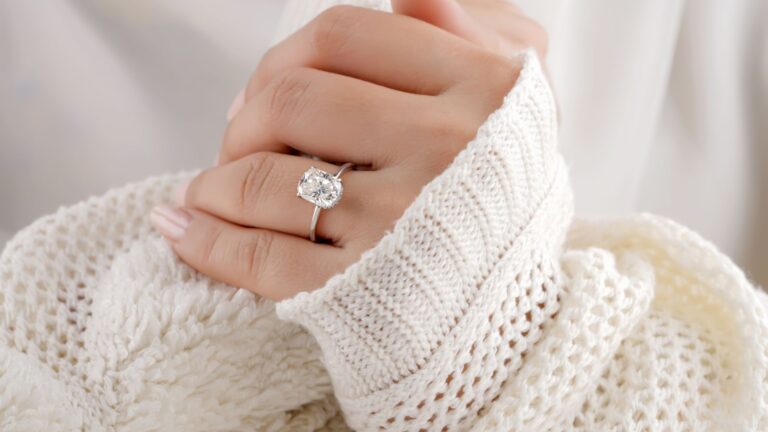
Because of their value and size advantages, lab-grown diamonds have become increasingly popular for engagement rings and modern jewelry designs.
Do Lab-Grown Diamonds Sparkle the Same as Natural Diamonds?
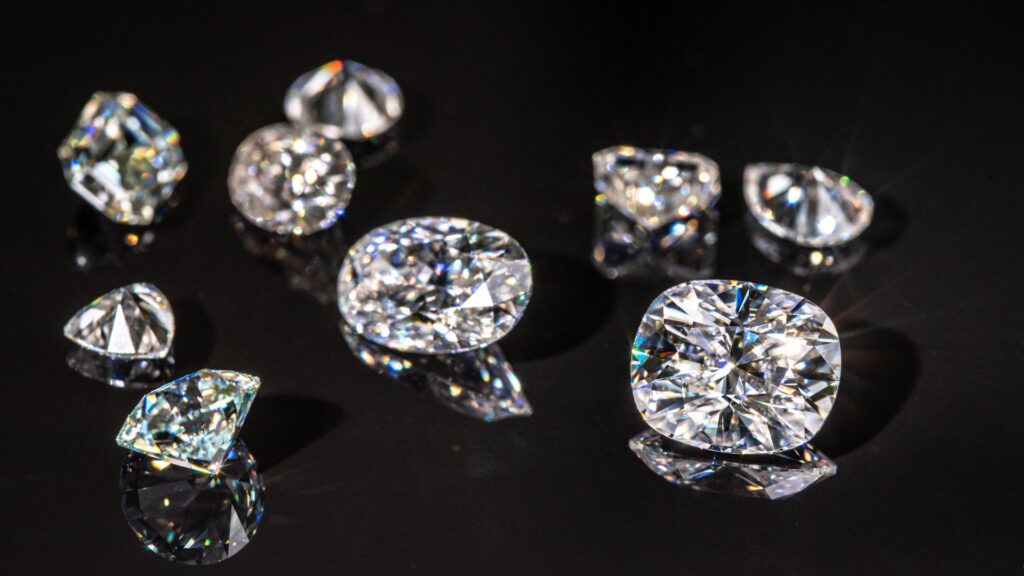
Yes. Lab-grown and natural diamonds sparkle exactly the same.
Both diamonds have the same crystal structure and are graded using the same standard known as the 4Cs of diamonds:
Cut – how well the diamond’s facets reflect light
Color – the absence or presence of color in the stone
Clarity – internal or external imperfections
Carat – the weight of the diamond
If two diamonds have identical 4C grades, they will look virtually indistinguishable to the naked eye.
Lab-Grown vs Natural Diamonds: Price Differences
One of the biggest factors influencing buyers today is price.
Lab-grown diamonds are usually 30–50% less expensive than natural diamonds.
This price difference allows many buyers to choose:
- A larger carat size
- Higher clarity
- Better color grading
Natural diamonds are more expensive because they are rare, mined from the earth, and limited in supply.
Do Natural Diamonds Hold Their Value Better?
Historically, natural diamonds maintain stronger resale value due to their rarity and long-standing position in the jewelry market.
Lab-grown diamonds are produced using technology that continues to evolve, which means their resale value is generally lower.
However, many buyers today prioritize size, beauty, and budget over resale considerations.
Choosing the Right Diamond for You
There is no “better” diamond, only the one that best fits your preferences.
Choose a Natural Diamond if You:
- Love the idea of a diamond formed by nature
- Prefer traditional engagement rings
- Value rarity and long-term collectability
- Want a classic heirloom piece
Choose a Lab-Grown Diamond if You:
- Want a larger diamond for your budget
- Prefer a modern alternative
- Want exceptional sparkle at a lower price
- Are focused on maximizing carat size
Both options offer stunning brilliance and durability that will last a lifetime.
See Lab-Grown and Natural Diamonds in Person
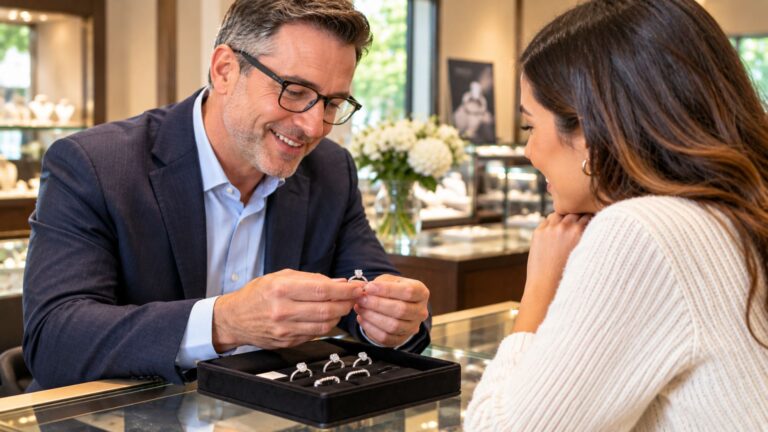
The best way to understand the difference between lab-grown and natural diamonds is to see them side by side.
At Sage Jewelers, we offer a carefully curated selection of:
- Natural diamonds
- Ethically sourced lab-grown diamonds
- Custom engagement rings
- Fine diamond jewelry
Our experienced jewelers are happy to guide you through the differences so you can choose the diamond that feels perfect for you.
Because the most important part of any diamond is the story it represents.
Frequently Asked Questions About Lab-Grown and Natural Diamonds
Are lab-grown diamonds real diamonds?
Yes. Lab-grown diamonds are real diamonds made from carbon crystals just like natural diamonds. They have the same physical and optical properties as mined diamonds.
Can you tell the difference between lab-grown and natural diamonds?
Not with the naked eye. Even professional jewelers require specialized equipment to identify whether a diamond is lab-grown or natural.
Are lab-grown diamonds cheaper than natural diamonds?
Yes. Lab-grown diamonds typically cost 30–50% less than natural diamonds, allowing buyers to purchase a larger stone for the same budget.
Do lab-grown diamonds last as long as natural diamonds?
Yes. Both diamonds rank 10 on the Mohs hardness scale, making them equally durable for everyday wear in engagement rings and jewelry.
Are lab-grown diamonds ethical?
Lab-grown diamonds are created in controlled environments rather than mined. Many buyers appreciate this modern production method when choosing their diamond.
Should I buy a natural or lab-grown diamond?
The right choice depends on what matters most to you. Some buyers prefer the rarity and tradition of natural diamonds, while others prefer the size and affordability of lab-grown diamonds.
Both are beautiful options.
Lab-Grown vs Natural Diamonds: Key Differences
| Feature | Natural Diamonds | Lab-Grown Diamonds |
| Formation | Formed in the earth over billions of years | Created in weeks in a laboratory |
| Rarity | Rare and limited supply | More readily produced |
| Price | Higher due to rarity | Typically 30–50% lower |
| Appearance | Identical to lab-grown | Identical to natural |
| Long-Term Value | Historically stronger resale value | Lower resale value |
Both options are diamonds and are graded using the same industry standards.